Diflucan is a branded form of fluconazole, an antifungal medicine used for infections such as vaginal candidiasis, oral and esophageal thrush, certain skin infections, and more serious systemic fungal disease when prescribed. Its broad tissue penetration and long half-life make it a practical option for conditions that need reliable antifungal coverage.
Review the current Diflucan offer and confirm the listed strength, quantity, and prescription steps before checkout.
Use the product page to verify treatment details and pharmacy terms against the prescribed plan.
For anyone looking to buy Diflucan online, the key issue is not convenience alone but matching the medicine to the infection, dose, and treatment length that a clinician has determined. Fungal symptoms can overlap with other conditions, so diagnosis, prescription handling, and pharmacy checks matter as much as the product itself.
What Diflucan is and when it is used
Diflucan contains fluconazole, a triazole antifungal that interferes with fungal cell-membrane formation by blocking sterol synthesis. This action helps stop fungal growth and supports clearance of susceptible infections.
It is used across several clinical settings, from common mucosal infections to more complex disease. Depending on the prescription, Diflucan may be selected for vaginal yeast infection, candidal balanitis, oral thrush, esophageal candidiasis, certain skin infections, nail infection in selected cases, cryptococcal meningitis, invasive candidiasis, and coccidioidomycosis.
Because the same product can be used for very different infections, the intended indication should always guide the strength, frequency, and duration of treatment.
- Common capsule strengths mentioned in the brief include 50 mg, 100 mg, 150 mg, and 200 mg.
- Oral absorption is high and food does not meaningfully limit uptake.
- Once-daily or once-weekly regimens may be used for some indications, but only according to the prescribed plan.
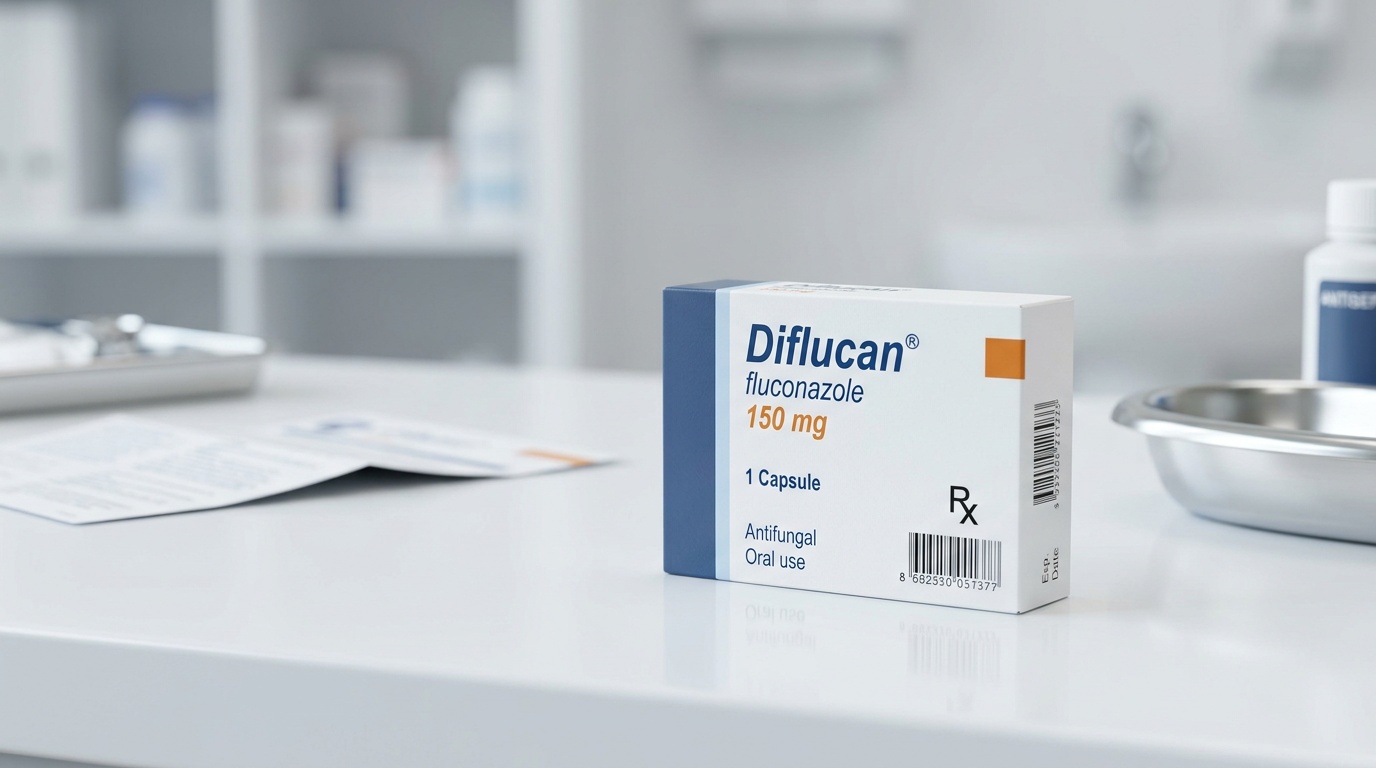
How Diflucan works in the body and why dosing schedules vary
Fluconazole is absorbed well after oral administration and reaches a wide range of body fluids and tissues. That distribution pattern helps explain why it can be used for infections affecting the mouth, esophagus, skin, nails, bloodstream, and even the central nervous system in appropriate specialist care.
Its elimination half-life is about 30 hours, which supports less frequent dosing than some other antifungals. In practice, one patient may receive a single dose for a straightforward episode of vaginal candidiasis, while another may need daily treatment or longer maintenance therapy for recurrent or invasive disease.
Most of the drug is cleared through the kidneys, so prescribers may need to account for renal function when deciding on a regimen. The listed dose on a product page should never replace individualized prescribing instructions.
- Take the medicine exactly as directed on the prescription or medication label.
- Treatment length can differ significantly by infection type and severity.
- If a dose is missed, follow the advice provided with the prescription or ask a pharmacist.

What to check before you buy Diflucan online
If you want to buy Diflucan online, use the product page as a starting point for verification rather than as a substitute for diagnosis. A reputable pharmacy workflow should make the medicine, strength, prescription requirement, and checkout steps clear before payment is completed.
The most useful buyer checks are practical: whether the listed product matches the prescribed strength, whether the quantity aligns with the intended course, and whether the pharmacy explains prescription review, refill handling, and how to contact a pharmacist or support team if questions arise.
Online purchase can be helpful for privacy and convenience, but it is safest when the site presents transparent product details and does not encourage self-diagnosis for symptoms that may need in-person assessment.
- Confirm the active ingredient is fluconazole and the product name is Diflucan.
- Match the listed strength and pack size to the prescription.
- Review checkout requirements for prescription submission or prescriber confirmation.
- Check delivery terms, refill rules, and pharmacy contact information on the offer page.
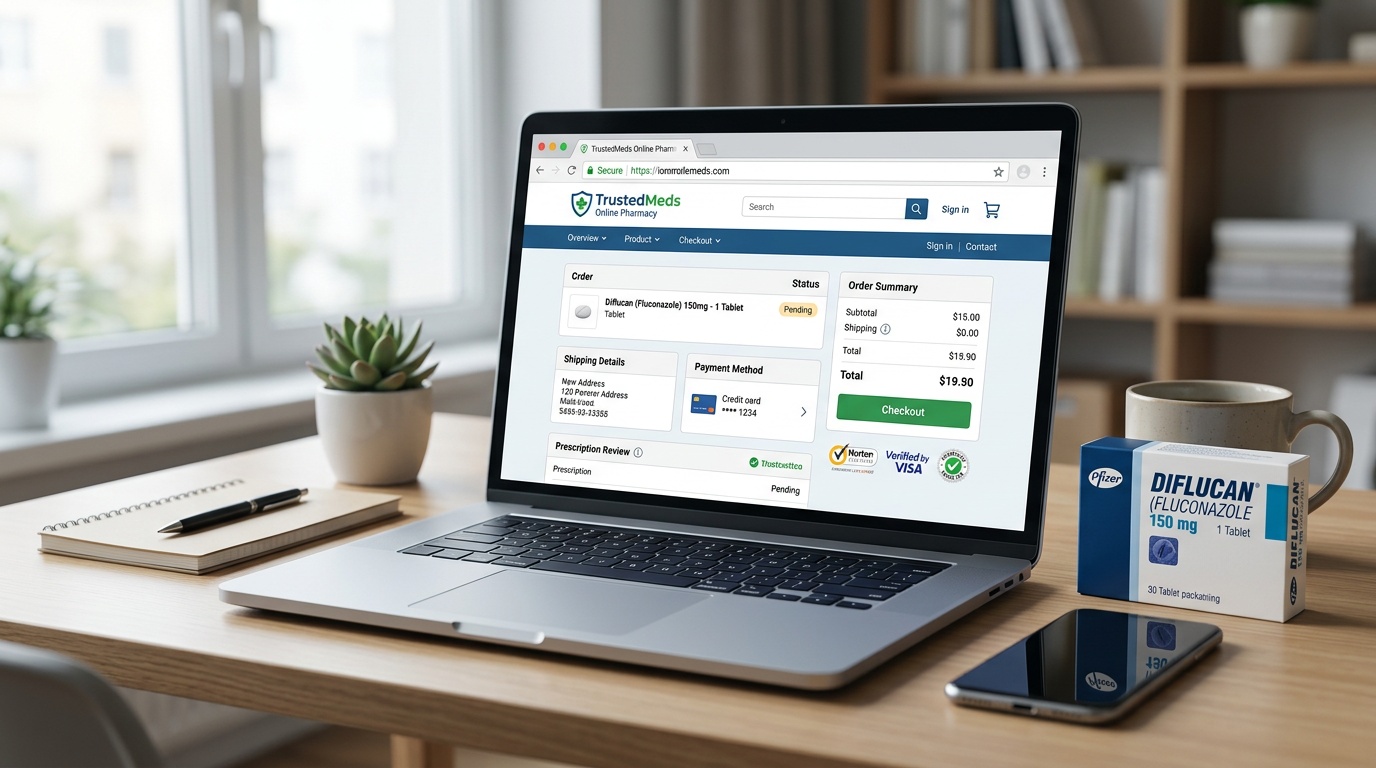
Prescription review and suitability checks
Diflucan should be used under appropriate medical guidance because the right regimen depends on the infection site, recurrence pattern, immune status, and kidney function. Symptoms that seem like a yeast infection can sometimes reflect another diagnosis, and persistent or recurrent symptoms deserve clinical review.
Prescription handling is especially important when Diflucan is being considered for recurrent vaginal candidiasis, oral or esophageal candidiasis, systemic fungal infection, or use alongside multiple other medicines. These situations may require confirmation of diagnosis, longer treatment plans, or closer follow-up.
If the pharmacy offers online access, the safe standard is still the same: prescriber review where required, clear labeling, and access to official product information or a patient leaflet.
- Seek review for recurrent, severe, or unexplained symptoms.
- Ask about renal dosing if there is known kidney impairment.
- Use official prescribing information and the patient information leaflet for product-specific directions.
Safety, interactions, and side effects to know
Diflucan is widely used, but it is still a prescription antifungal with important safety considerations. Side effects can include headache, nausea, abdominal discomfort, diarrhea, or rash, and patients should seek medical advice if symptoms are severe, persistent, or unusual.
Interaction review matters because fluconazole can affect the handling of other medicines. The prescriber or pharmacist should review the full medication list, including prescription medicines, over-the-counter products, and supplements, before treatment starts.
Pregnancy and breastfeeding considerations should be discussed with a clinician before use. Patients with liver disease, kidney impairment, heart-rhythm concerns, or a history of hypersensitivity to azole antifungals should also be evaluated carefully before taking Diflucan.
- Do not start treatment based only on symptom similarity.
- Report signs of allergic reaction or significant skin reaction promptly.
- Ask a pharmacist or prescriber to review all current medicines for possible interactions.
- Follow the labeled course and monitoring advice for longer or repeated treatment.
Understanding product-page pricing and offer details
A responsible Diflucan product page should help the buyer understand what is being purchased without overstating commercial claims. The most useful pricing context is usually the listed price for the strength and quantity shown, along with whether the checkout process requires prescription verification before fulfillment.
When comparing online options, focus on like-for-like details rather than headline numbers alone. A different strength, pack size, or treatment quantity can change the apparent price, so the meaningful comparison is the exact prescribed product and the terms attached to it.
If details such as delivery timing, substitution policy, or refill handling are important to the purchase, those should be reviewed on the offer page before ordering.
- Compare the same strength and quantity across options.
- Check whether listed pricing is tied to a specific pack size.
- Review any stated prescription-processing and fulfillment terms before checkout.
Common questions about Diflucan
Can I buy Diflucan online without knowing exactly what infection I have?
It is safer to obtain a diagnosis first. Symptoms of fungal infection can overlap with other conditions, and the correct dose and duration depend on the confirmed diagnosis.
Is Diflucan used as a single dose or a longer course?
Both are possible. Some infections may be treated with a single dose, while others require daily treatment, weekly treatment, or longer maintenance therapy under medical supervision.
What should I review on a Diflucan product page before ordering?
Check the active ingredient, strength, quantity, prescription requirements, pharmacy contact details, and the terms for prescription review, fulfillment, and delivery.
Content reviewed April 2026
